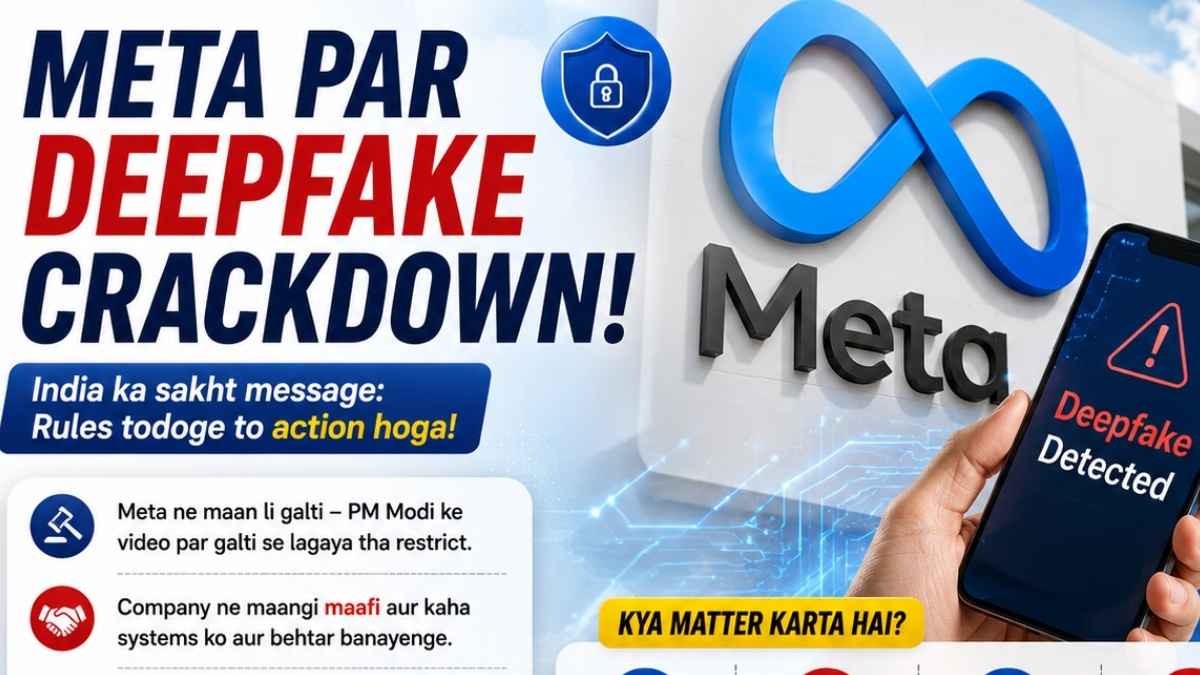

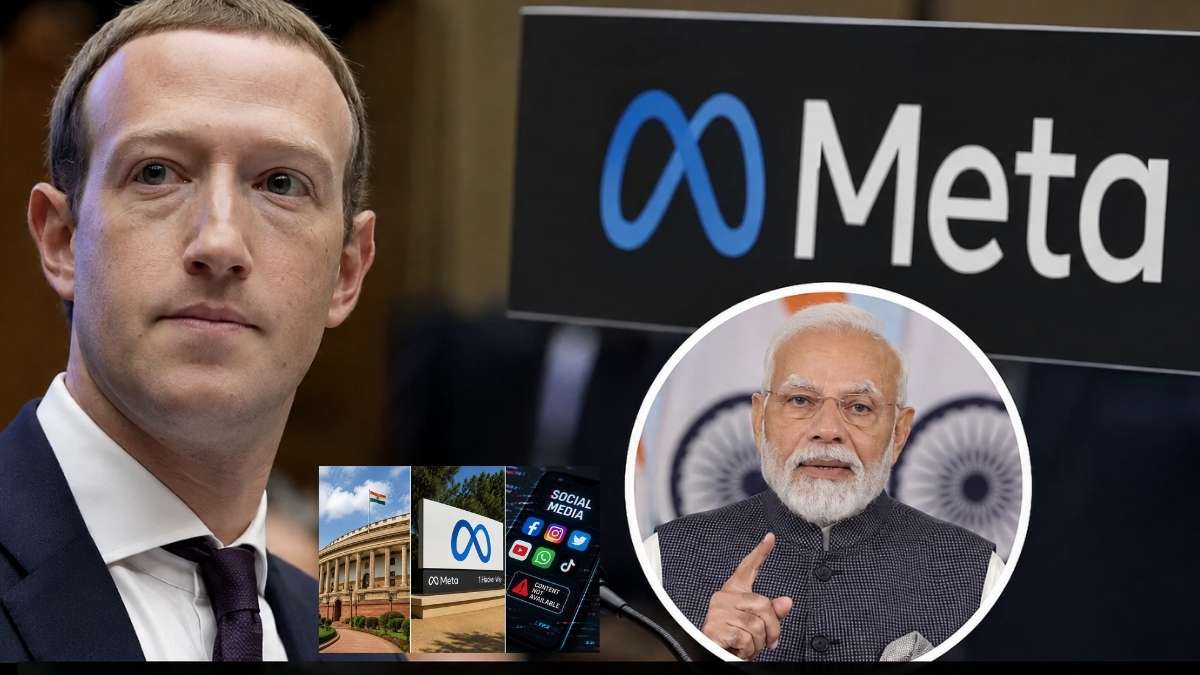
Late on 28 July 2026, Meta’s Facebook briefly blocked a video message by Prime Minister Narendra Modi, sparking a major controversy. The Indian government immediately summoned Meta executives to explain, and a parliamentary IT committee demanded answers from Meta’s leadership. Meta Platforms, via its Chief Global Affairs Officer Joel Kaplan, formally apologised to India, calling the incident an “operational error”. MPs warned that Meta could lose its legal immunity (“safe harbour”) if the apology was not accepted, and pressed for accountability on content moderation. This feature documents the verified timeline, the content involved (a PM address on exam paper leaks), how the error occurred, official responses (Meta and Indian authorities), legal issues (IT Act safe-harbour rules), related online safety concerns (CSAM, deepfakes), expert commentary, and the wider implications for online safety and platform regulation in India.
Timeline of events
| Date (2026) | Event |
|---|---|
| 23 Jul | PM Modi posts a video message on his social channels about exam paper leaks and student protests. |
| 28 Jul (early) | Facebook briefly restricts that video (approx. 00:30–05:30 IST). Meta later says it was a technical error. |
| 30 Jul | India’s IT Ministry summons Meta’s executives (New Delhi meeting) to explain the incident. |
| 3 Aug | Parliamentary IT Committee (chaired by Nishikant Dubey) summons Meta (and other platforms). Dubey calls deletion an “attack on democracy” and demands Zuckerberg apologise. |
| 5 Aug | Joel Kaplan (Meta) meets IT Minister Ashwini Vaishnaw; apologises for the “error” that led to the takedown. Simultaneously, MPs reiterate the ultimatum for Zuckerberg’s apology. |
| 6 Aug (current) | Ongoing discussions on content moderation and online safety; Meta considering new safeguards for high-profile accounts. |
What happened: Modi’s video and its removal
On 23 July 2026, Prime Minister Narendra Modi shared a selfie-style video on Instagram (also posted to Facebook) addressing a nationwide student protest. The students were agitating over leaked exam papers in crucial tests, a scandal that had already forced India’s Education Minister to resign. In the video, Modi spoke directly to young voters (Gen Z), promising swift action against paper-cheaters and reassuring them that their concerns were being heard. This was reported to be his first direct “selfie video” to India’s youth about the exam leak issue. The post quickly went viral, with Reuters noting it had over 404 million views on Instagram, reflecting its wide reach.
In the early hours of 28 July (around 00:30 IST), that Facebook video inexplicably vanished for Indian users. Hindustan Times and parliamentary reports state the post was inaccessible for roughly five hours – from 00:30 until about 05:30 that morning. During that time, anyone who tried to view the PM’s post saw only a blank or error message. By dawn, Meta had restored the content. Importantly, the video was not a banned or sensitive material by policy: it was Modi’s own speech on a matter of public importance. The fact that a democratically elected leader’s message could disappear triggered immediate uproar on social media and in government circles.
Meta told Indian authorities and press that the removal was an accident. Company statements described it as a technical glitch or “operational error” in Facebook’s automated systems. Joel Kaplan was quoted as saying he “apologised to [the IT] minister on behalf of Meta for error restricting PM Modi’s post”. Media coverage confirmed that Meta has blamed an algorithmic misfire – the content was deleted by mistake and later restored.
It is worth noting that once Meta rectified the issue, no trace of censorship intent remained: the video was simply back online, and no public apology was needed (outside official channels). Nonetheless, the mere disappearance was seen by many Indians as a serious breach. The episode unfolded amid a charged political moment – a major youth-led protest, a minister’s resignation – so the restoration, while swift, came only after outrage had already rippled through news and social feeds
Why was the video removed? (Content moderation glitch)
Meta maintains that the takedown was never supposed to happen. In meetings with Indian officials, company representatives explained that their automated moderation system erroneously flagged the PM’s video. Facebook algorithms scan billions of posts daily, and occasionally relevant content can be caught in a false positive. In this case, Meta cited “algorithmic error” and promised to fix it. The New Indian Express reported Meta told the committee the video was removed by a technical error and promptly restored.
Indian officials probed further. In Parliament, leaders asked pointedly: which filter triggered? Was it certain keywords (e.g. “paper leaks” or “protest”) that overlapped with disallowed categories? Meta did not provide a detailed post-mortem publically. However, MPs pressed Meta to improve safeguards so that a post by a verified high-profile leader could not be dropped by a simple mistake.
From an engineering standpoint, mistakes like these can occur if, for example, the content contained references or satire that confused the AI. Interestingly, the protest movement was led by a satirical group calling itself the “Cockroach Janta Party,” which was mocking the government (a detail noted by NDTV). It is conceivable (though unconfirmed) that automated checks for abusive or politically sensitive content were temporarily tripped. Regardless, Meta’s internal review deemed it a bug.
Globally, similar incidents have happened. Major platforms have in the past inadvertently censored or hidden posts from public figures (e.g., mistakes in applying hate-speech rules to newsworthy political messages). The difference here was the public reaction: because it involved India’s Prime Minister, it became headline news in hours. Analysts observe that even with advanced AI, humans and systems must work in tandem. Indeed, the Parliamentary panel later noted that if such “glitches” can silence a PM, Meta needs to accelerate improvements in its content tools.
Meta’s apology and official responses
Within a week of the incident, Meta moved to mend fences. On 5 August 2026, Joel Kaplan flew to New Delhi to meet IT Minister Ashwini Vaishnaw at Rail Bhawan. In a statement after the meeting, Meta confirmed it had apologised. “I apologised to the minister on behalf of Meta for error restricting PM Modi’s post,” the statement said. This publicly formalised what sources had reported: that Meta acknowledged the mistake and regretted any upset caused.
Indian media described the apology as part of “intensive talks” between Meta’s global team and government officials. Alongside Kaplan were other Meta policy leaders (reports name VP Kevin Martin and India policy head). The meeting agenda went beyond the Modi video; officials pressed Meta on other pending issues. In fact, MeitY Secretary S. Krishnan later said the talks would cover “Child Sexual Abuse Material (CSAM), synthetically generated content (deepfakes), and safeguards for verified accounts, alongside the video removal”. Thus, the video glitch became one item in a broader compliance audit.
During the discussions, Meta conceded some alarming facts. For instance, news reports (citing government sources) said Meta admitted to India’s ministers that it had allowed a surge of paid promotion of certain content on its platform. One report quotes: “a lot of money was paid for boosting a certain type of content,” implying top-down advertising influenced algorithms. While not directly related to the video, this admission added to Delhi’s dissatisfaction with Meta’s operations in India.
In parallel, Meta faced questions about child safety. The week before, the government had intervened after a BBC investigation found dozens of Instagram ads for child sex abuse content slipping through filters. Government officials specifically asked Meta what it was doing to clamp down on such CSAM and AI-manipulated media. Joel Kaplan, while apologising for the video, also pledged that Meta would intensify its detection of illegal content and fix any systemic lapses.
However, some critics noted that Meta’s apologies still fell short of full accountability. The Times of India reported committee members saying “the issue was not about an apology but about fixing accountability”. In other words, lawmakers pressed: Who within Meta clicked “delete”? Are they facing consequences? Joel Kaplan’s meeting appears to have been just the first step; MPs wanted specific answers.
On the government side, officials kept the pressure on. On 30 July, S. Krishnan told Reuters that he had “asked Meta to come in at the highest level and explain what is happening”. After the August meetings, he added publicly that the company’s “technical error” claim did not fully allay India’s concerns. MeitY gave press briefings noting that while Meta apologised, the Ministry did not find it entirely satisfactory. The message was firm: India expects Meta to adhere to local laws and cannot tolerate such failures in the future.
Government action and parliamentary scrutiny
The Modi video fiasco quickly escalated into a political issue. On 3 August 2026, Parliament’s Standing Committee on Communications and IT held hearings with Meta, Google, Twitter (X), YouTube and others. The headline was Modi’s video: MPs repeatedly asked Meta’s India head and policy staff why the post was removed. BJP MP Nishikant Dubey, chairing the committee, said in media remarks that allowing a video of the Prime Minister to vanish was “a very serious matter”. He demanded that Mark Zuckerberg himself apologise, calling it an “attack on democracy”.
The committee went further: it issued an ultimatum demanding Zuckerberg apologise within three days, or Parliament would seek to revoke Meta’s legal immunity (“safe harbour”). This was reported by multiple outlets. One parliamentary letter (cited by PTI and press) gave a 3-day deadline for an apology, warning that without it, safe harbour protection under Section 79 of the IT Act could be withdrawn. Dubey said publicly that if Meta did not comply, “a case may be filed” against the company.
The concept of safe harbour is key here. Under Indian law, intermediaries are generally not liable for user content provided they follow certain guidelines. Revoking that immunity (even partially) would expose Meta to possible legal action for any unlawful content (defamation, incitement, etc.) on Facebook/Instagram in India. While the panel doesn’t have unilateral power to repeal the law, it was signaling that if Meta doesn’t voluntarily make amends, courts could be asked to reconsider its status. (Notably, Hindustan Times clarified that safe harbour is statutory and can only be withdrawn through legal process.)
Committee members on both sides of the aisle expressed outrage. Some pointed out that Twitter (X) and YouTube had also accidentally restricted accounts or videos in the past, but those were eventually fixed quietly. Meta’s case was different because a national leader was involved, heightening the stakes. The panel’s tough stance — demanding high-level apologies and accountability — reflects a bipartisan concern over platform accountability, beyond just this one incident.
Meanwhile, MeitY continues to scrutinise Meta’s compliance. The government has data privacy and online safety frameworks (2011 IT Act, 2018 rules, 2021 rules updates) that require platforms to follow the law, appoint officers, and remove unlawful content on orders. After the video incident, officials said they would check if Meta violated any of these provisions. Rumours that cyber police might raid Meta’s offices or block the app circulated online, but as of 6 August none of those extreme steps have been taken. For now, the response has been high-level meetings and warnings.
Content of the restricted video
For clarity, here is what the video said (based on media summaries). PM Modi appeared in a direct-to-camera format, saying he understood the students’ anger over leaked exam papers and that strict action would follow. He noted that the protests had led to uncovering “a major paper leak” ring, and that a special team had been formed. He reassured parents and students he was taking the issue seriously. He then said that the guilty would not go unpunished, and that the education minister had resigned to take responsibility. (None of this content violates Facebook’s rules; it is an official government speech.)
The government highlighted that the video was on an official page and meant for public information. While it contained strong language about “strict action” and “no compromise”, it was clearly political speech, not hate or abuse. The retrieval of questions: was any particular phrase flagged? Media reports did not identify any censored words. Meta’s rapid restoration suggests the system “unflagged” it after review. In short, this was an unintended removal of a lawful video rather than censorship of forbidden speech.
Legal and regulatory context
India’s IT laws and rules form the backdrop to these events. Under Section 79 of the IT Act, intermediaries like Meta get broad protection from liability if they conform to the law. They must, for instance, follow government orders to block content, and exercise due diligence (such as having a grievance process). The “safe harbour” provision was meant to protect platforms from being treated as publishers. However, after this incident, some Indian officials have argued that Meta acted more like a publisher because it uses algorithms to prioritize content.
If safe harbour were revoked (which would require judicial action), Meta could in theory be held accountable for any illegal content on its platform unless it can prove it acted diligently. That’s a big threat, which is why the panel signalled it. The parliamentary meeting effectively told Meta: No more excuses; behave responsibly or face the legal music.
Separately, the IT (Intermediary Guidelines) Rules of 2021 impose duties on large social media companies: appointing a grievance officer, swift response to complaints about disinformation or abuse, traceability of originators (where ordered by courts), etc. The Modi-video blunder was not a complaint-driven takedown, but it may prompt authorities to check if Meta is complying with even the ordinary rules of transparency (e.g., did they report this error to any oversight bodies?).
Internationally, debates mirror India’s. The EU’s Digital Services Act, for example, will require very large platforms to audit their algorithms and report to regulators. While India doesn’t have an exact analogue yet, incidents like this make Indian lawmakers more likely to demand something similar. They are watching how other countries handle AI moderation failures. The Modi case may end up cited as an example in any future legal reforms or court cases about platform liability in India.
Related online safety issues (CSAM, deepfakes)
The Modi video case was one among several scrutiny points for Meta in India. Earlier in July, Indian authorities had already taken Meta to task for child protection lapses. A BBC Eye report found about 30 paid Facebook/Instagram adverts promoting child sexual abuse material (CSAM) in India. The government ordered Meta to remove those ads; Meta said it has zero tolerance for CSAM and would step up filters. In the Modi video meeting, officials again raised CSAM as a key issue. The parliamentary committee even issued new warnings: Meta (and Google, X, Snapchat, etc.) were told to remove CSAM immediately or face fines and cases.
Another angle is deepfakes/synthetic media. Social media companies are under pressure to address AI-generated fake videos. In the committee hearing, Dubey explicitly mentioned “AI-generated fake videos of women” as examples of heinous content. The Modi incident isn’t a deepfake, but the concern is that algorithms can create or detect fake videos imperfectly. India’s Digital Ministry has reportedly considered requiring platforms to watermark AI-deepfakes. This broader AI content debate ties into the Modi case because both involve algorithmic trust: if AI can knock down a video by mistake, what if an AI put it back up later?
In summary, while the immediate controversy was about one video, it happened in a climate of heightened unease about online abuse and manipulation. This has made the government quick to link the Modi video glitch with its demands that Meta police all sorts of harmful content, not just political speech.
Expert and public reaction
Though direct expert quotes are scarce in press reports, analysts note that this is a test of platform accountability. Technology policy experts point out that automated systems need to be regularly audited, especially when they affect critical speech. For instance, one columnist observed that “the real story here is not censorship, but the growing pains of AI moderation on global platforms” (NDTV’s report paraphrases lawmakers in this vein).
Public sentiment was sharply divided. Modi’s supporters saw the removal as a grave affront requiring stern action. Some compared it to censorship. Others called for calm, noting that Meta had admitted its mistake. Social media feeds were abuzz with hashtags (e.g. #FacebookApologizeToIndia, #ModiAnger), though misinformation also spread (claims that the video contained secret code or that Meta planned the glitch for personal gain). Fact-checkers emphasised using credible news sources: Reuters, PTI and mainstream papers consistently reported the “glitch” narrative, countering rumors that it was a deliberate block.
Internationally, tech observers saw this as another sign that big social platforms must better manage local sensitivities. Remembering past gaffes, like when YouTube once accidentally restricted a head-of-state’s account (e.g. a few years ago, it briefly demonetized a video of a foreign leader by mistake), experts say these incidents are unfortunate but fixable by improved processes. One privacy advocate noted that the Modi case might push India to adopt transparency rules so we know why each piece of content was taken down (the EU DSA model).
Myths vs. Facts
Myth: Meta intentionally censored PM Modi’s video for political reasons.
Fact: Meta’s official line and consistent media reports say this was an unintended error. The video was quickly restored, and no evidence has surfaced that it was a deliberate ban. In fact, Meta apologised publicly for unintentionally removing it.
Myth: The video was permanently deleted and can’t be recovered.
Fact: The video was fully restored by early 28 July morning. It was never lost. All evidence (and Meta’s apology) confirms it was a temporary removal only.
Myth: Meta broke Indian law by deleting the video.
Fact: The IT rules compel platforms to remove unlawful content, but the PM’s speech is lawful. The video’s brief removal was a system error, so legally it’s treated as a compliance incident, not a violation. No fine or jail term applies for an accidental glitch under current law.
Myth: Mark Zuckerberg personally ordered the removal.
Fact: No. In fact, lawmakers are pressuring Zuckerberg to apologise after the fact. There’s no suggestion he orchestrated anything. All accounts indicate he was outside this loop.
Myth: India revoked Meta’s safe-harbour protection already.
Fact: Not yet. The parliamentary panel has threatened to consider revoking it if Meta doesn’t apologise, but no official action has occurred. Safe-harbour remains in force as long as Meta follows the law. Experts emphasize revocation would require a court process.
Implications and way forward
The Modi video incident will likely have several outcomes:
- Platform changes: Meta may implement additional checks for high-profile accounts. For example, allowing automatic appeals or human review for any takedown affecting a verified public figure. In media interviews, some Meta sources indicate they are indeed working on such measures in India (though no public press release on this yet).
- Policy reforms: The strong reaction may accelerate India’s digital policy debates. There could be new rules or guidance mandating rapid review of mistakes. Lawmakers in Parliament have mentioned tightening intermediary guidelines or creating “tech ombudsmen” as possible measures. The Modi case gives urgency to those discussions.
- Global context: India’s actions send a message internationally. Countries worldwide are wrestling with Big Tech. India has not banned Meta or shut it down, but it made clear that platform lapses on national speech will face scrutiny. Tech CEOs meeting foreign ministers is not unusual, but an apology of this sort on Indian soil is notable. It highlights how even tech titans must respect each country’s laws and sentiments.
- Media and user practices: Journalists covering government announcements may now double-post on multiple channels (e.g., official website, YouTube, Telegram) to ensure redundancy. Social media users are reminded that content can vanish unexpectedly; digital literacy advocates may use this case to push for “right to explanation” norms.
Accountability precedent: While Meta issued a statement, it did not name any individuals internally responsible. The demand for accountability from MPs could pressure Meta’s internal processes. If any firing or reorganization happens, it won’t be public. But future intermediaries (like Google, Twitter) will be watching closely in case a major speech is inadvertently taken down on their networks.
the incident was an operational glitch with outsized political consequences. Verified facts show Meta’s brief mistake triggered government and media firestorms. The way forward involves both technical fixes by Meta and clearer rules by policymakers. This case underscores the high stakes of content moderation in democracies: protecting free flow of legitimate speech, while also guarding against online harm, is a delicate balance. The Modi video row will be remembered as a landmark moment in India’s digital regulation saga.
FAQs
- Q: Why did Meta block PM Modi’s Facebook video?
A: Meta says it was an “operational error” by its moderation algorithms. The video was temporarily restricted due to a technical glitch, not because of content violation. It was restored within hours. - Q: How long was the video unavailable?
A: About 5–6 hours. Reports indicate it was offline from roughly 00:30 to 05:30 IST on July 28, 2026. - Q: Did Meta apologise for the incident?
A: Yes. Joel Kaplan apologised to India’s IT Minister on behalf of Meta. Meta publicly regretted the error and said it was fixing its systems. Media also said Mark Zuckerberg apologised privately over related issues (CSAM, deepfakes) during the same week. - Q: What is “safe harbour” and how does it relate?
A: Safe harbour (Section 79 of India’s IT Act) shields platforms from liability for user-generated content if they follow rules. The parliamentary committee warned that Meta could lose this protection if it didn’t comply (i.e. if it didn’t apologise). Revoking safe harbour would expose Meta legally to cases for content, but that requires a judicial process. - Q: Is Meta facing any penalty now?
A: Not as of early August 2026. The panel demanded an apology within 3 days. If Meta fails, lawmakers have threatened legal action (like FIRs or asking courts to strip immunity). But no fines or orders have been announced. - Q: Was any law broken by Meta?
A: No criminal law was broken. Meta’s actions were not illegal under current IT rules—this was an accidental moderation error. The issue was treated administratively, not as a crime. - Q: What’s next for online safety?
A: The incident is likely to hasten new rules. India may require stronger oversight of algorithms and safer modes for political speech. Platforms will face stricter demands for child safety and anti-deepfake measures. Users may push for transparency on how content is moderated. - Q: How does this affect everyday users?
A: It’s a reminder that even public content can vanish unexpectedly. It underscores the importance of using multiple channels for important updates. For ordinary users, it also signals that governments are eyeing stricter controls on platform behavior—both for protecting public figures’ speech and for cracking down on illicit content.