
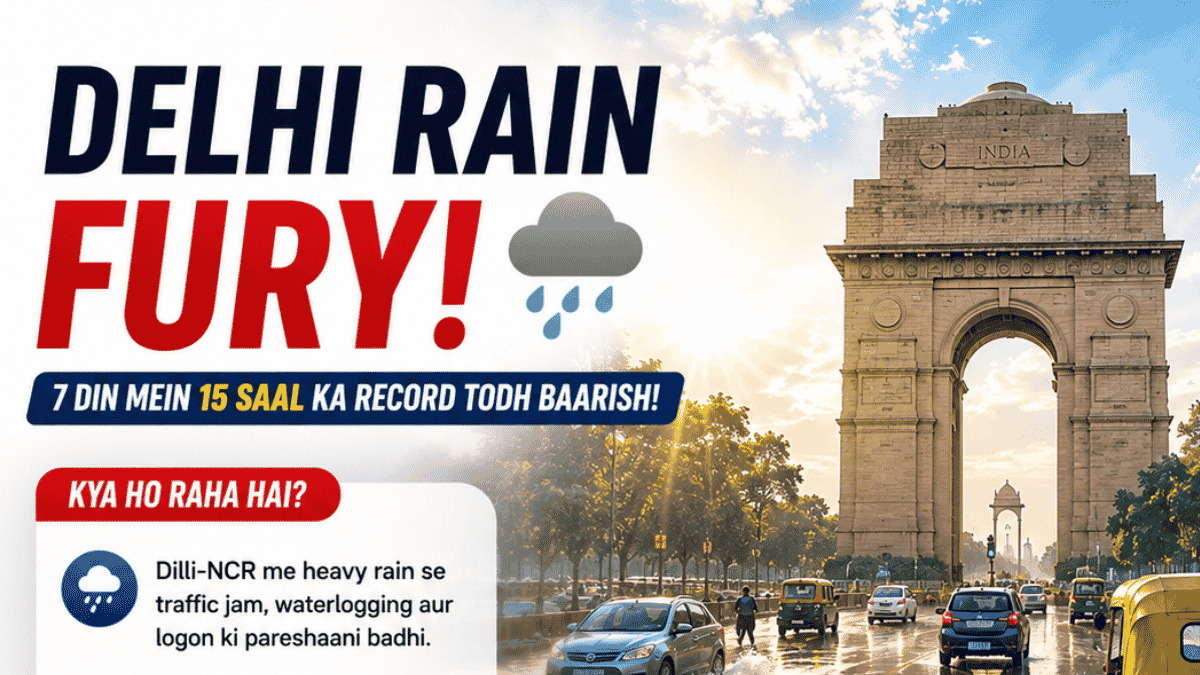
Delhi's monsoon has entered the part of the season when a few hours of intense rain can change the rhythm of the entire city. Roads that normally carry thousands of vehicles can slow to a crawl, underpasses become difficult to use, and a routine commute can suddenly turn into a long wait. In recent days, heavy rain across Delhi-NCR has again pushed waterlogging, traffic disruption and weather preparedness into the public conversation. Reports cited in the earlier search noted that Safdarjung recorded about 127 mm of rain during the first seven days of August. The figure is significant because it illustrates how quickly rainfall can accumulate over a short period. The practical impact of rain, however, depends not only on the total amount but also on intensity, location, drainage capacity and the timing of the heaviest spell.
The India Meteorological Department has continued to issue rain-related warnings for Delhi-NCR and several other parts of India. Weather alerts are designed to provide advance notice, but they cannot always predict the exact street or hour at which disruption will be greatest. For commuters, this means that a general forecast should be combined with local traffic and weather updates.
Waterlogging is one of the most visible consequences. Low-lying roads, underpasses and stretches with poor drainage can become difficult to cross even when rainfall has stopped. Once one major route is blocked, traffic often moves to neighbouring roads, creating a chain reaction. This is why a relatively short period of intense rain can produce hours of congestion. The problem is particularly important for people travelling to airports and railway stations. Delhi's transport network connects the capital with neighbouring cities and states, so disruption on one corridor can affect journeys far beyond the flooded road itself. Travellers should therefore allow additional time during periods of heavy rain rather than relying on normal journey estimates.
Rain also changes the risk profile for pedestrians and two-wheeler riders. Water can hide potholes, open drains, uneven surfaces and other hazards. A road that looks passable may have a deeper section underneath the water. The safest approach is to avoid entering visibly flooded stretches when an alternative route exists. For schools and workplaces, the question is often whether rain alone is enough to justify a closure. That decision is normally local rather than nationwide. Authorities may consider rainfall, flooding, road conditions and the safety of students or employees before issuing instructions.
The bigger story behind Delhi's rain is urban resilience. A city does not need to prevent every flood to be considered prepared, but it does need systems that reduce disruption and help residents receive timely information. Drainage, road maintenance, pumping capacity, traffic management and emergency communication all become important during intense weather. Heavy rain is also a reminder that monsoon forecasts matter to travellers beyond Delhi. Hill stations, coastal areas and flood-prone districts can face very different risks from the same weather system. Anyone planning a trip during the monsoon should check official forecasts close to departure and remain flexible when conditions deteriorate.
For now, the most sensible response is practical rather than alarmist: monitor official weather updates, avoid unnecessary travel during the heaviest spells, keep extra time for commuting, and never underestimate moving or standing floodwater. Delhi's rain may be seasonal, but the disruption it creates is a test of how prepared the city is for increasingly intense weather.