































“Naukriyon ka naya yug”- How Artificial Intelligence is rewriting the Future of work
Across offices, factories, hospitals, and even creative industries, a silent revolution is unfolding. It is not led by governments or traditional economic forces but by a technology that has rapidly moved from research labs into everyday life. Artificial intelligence, once considered a futuristic concept, is now becoming one of the most powerful forces reshaping the global workforce. In 2026, conversations about artificial intelligence are no longer limited to technology conferences or academic debates. They are happening in workplaces, universities, corporate boardrooms, and among millions of workers wondering how their careers might change in the coming years. Experts increasingly believe that artificial intelligence will redefine how people work, what jobs exist, and what skills will matter in the future.
The Rise of AI in Everyday Work
Artificial intelligence systems have evolved rapidly during the past decade. What once required specialized computing infrastructure can now be done through cloud-based tools accessible to businesses of all sizes. Companies are adopting AI technologies to perform tasks such as analyzing data, predicting market trends, handling customer service interactions, and automating repetitive office work. Even industries traditionally dependent on human creativity are beginning to experiment with AI-driven tools. Marketing teams use AI to analyze customer behavior and generate advertising strategies. Financial firms deploy machine learning algorithms to detect fraud and manage investments. Hospitals rely on AI-assisted systems to help interpret medical scans and support diagnostic decisions. This expansion is not limited to one industry. It is spreading across almost every sector of the global economy.
Why Businesses Are Embracing Artificial Intelligence
One reason companies are investing heavily in artificial intelligence is efficiency. AI systems can process massive volumes of information much faster than humans, identifying patterns that might otherwise remain hidden. For businesses operating in competitive markets, this ability can provide a major advantage. AI-powered analytics can reveal customer preferences, optimize supply chains, and reduce operational costs. Another factor is scalability. Once an AI system is trained, it can perform tasks continuously without fatigue. This allows companies to handle larger workloads without proportionally increasing staff numbers. However, the rise of these systems also raises important questions about the future of employment.
Will AI Replace Jobs?
The fear that machines might replace human workers has appeared during every technological revolution. During the Industrial Revolution, factory machines replaced many manual labor roles. When computers entered offices, certain clerical jobs disappeared. Artificial intelligence represents another stage of this long technological evolution. But experts emphasize that AI does not simply eliminate jobs. Instead, it transforms them. Many roles may change significantly rather than disappear completely. Tasks that involve repetitive data processing or routine decision-making are particularly vulnerable to automation. For example, administrative roles involving data entry or document processing may gradually shift toward more analytical or supervisory responsibilities as AI tools take over basic tasks.
New Careers Emerging in the AI Economy
While some traditional job roles may evolve or decline, artificial intelligence is also creating entirely new career paths. Companies now hire specialists who train AI systems, analyze machine learning outputs, and ensure algorithms operate ethically and responsibly. Roles such as data scientists, machine learning engineers, AI trainers, and algorithm auditors are growing rapidly. Even professions outside the technology sector are adapting. Lawyers increasingly work with AI-powered legal research tools. Journalists use AI to analyze large datasets for investigative reporting. Designers experiment with AI-generated visual concepts. These developments suggest that the future workforce may require a blend of technological literacy and human creativity.
The Skills That Will Matter Most
As artificial intelligence becomes more integrated into professional environments, education systems are beginning to adjust. Universities and training institutions are expanding programs related to data science, programming, and digital innovation. However, technical skills alone may not define the future workforce. Experts believe uniquely human abilities will become even more valuable. Critical thinking, creativity, emotional intelligence, and complex problem-solving are areas where humans continue to outperform machines. Jobs that involve collaboration, leadership, and social interaction may remain resilient even as automation expands. In other words, the future of work may depend on combining technological understanding with distinctly human strengths.
How Governments Are Responding
Recognizing the transformative impact of artificial intelligence, governments worldwide are exploring policies designed to prepare their populations for technological change. Some countries are investing heavily in digital education initiatives aimed at preparing students for AI-driven industries. Others are introducing reskilling programs to help workers transition into emerging sectors. There is also growing debate about how to regulate artificial intelligence responsibly. Policymakers are considering rules that address algorithm transparency, data privacy, and the ethical use of automated decision-making systems. The goal is to encourage innovation while protecting workers and consumers.
AI and the Global Economy
Artificial intelligence is not only changing jobs but also reshaping global economic competition. Countries investing heavily in AI research hope to become leaders in industries such as robotics, autonomous transportation, and advanced analytics. Major technology hubs in North America, Europe, and Asia are competing to attract AI talent and startup investment. Governments view AI development as both an economic opportunity and a strategic priority. The outcome of this global race could determine which nations dominate the next generation of technological innovation.
A Future of Human-Machine Collaboration
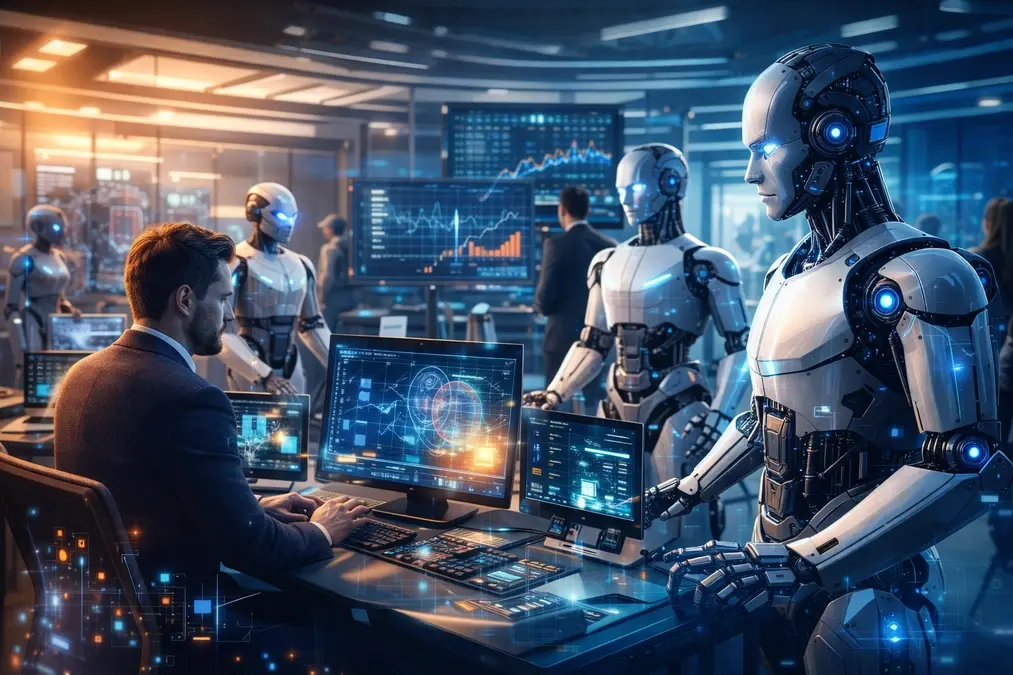
Despite widespread concerns about automation, many experts believe the most realistic future involves collaboration between humans and intelligent machines. AI systems excel at analyzing data and performing repetitive tasks, while humans bring creativity, empathy, and judgment to complex situations. In workplaces of the future, employees may rely on AI assistants to handle routine operations while focusing their own energy on strategic thinking and innovation. This partnership could dramatically increase productivity and open new possibilities for creativity and entrepreneurship.
The Beginning of a New Work Era
Artificial intelligence is transforming the global workforce in ways that were difficult to imagine only a decade ago. While the technology presents challenges and uncertainties, it also offers opportunities for innovation, economic growth, and new career paths. For workers, businesses, and governments, the key challenge will be adapting to this rapidly evolving environment. The future of work will not be defined solely by machines but by how humans choose to use them.
- Bollywood Wedding Buzz: Celebrity Marriage Rumours Go Viral on Social Media
- Hidden Travel Destinations Indians Are Secretly Booking in 2026
- Doctors Warn: This Everyday Habit Could Be Slowly Damaging Your Heart
- “Samundar Ki Gehraiyon Ka Rahasya”: The Deep-Sea discovery That is fascinating Scientists
- AI Jobs Alert: Experts Warn Nearly 40% of Global Jobs Could Transform by 2035